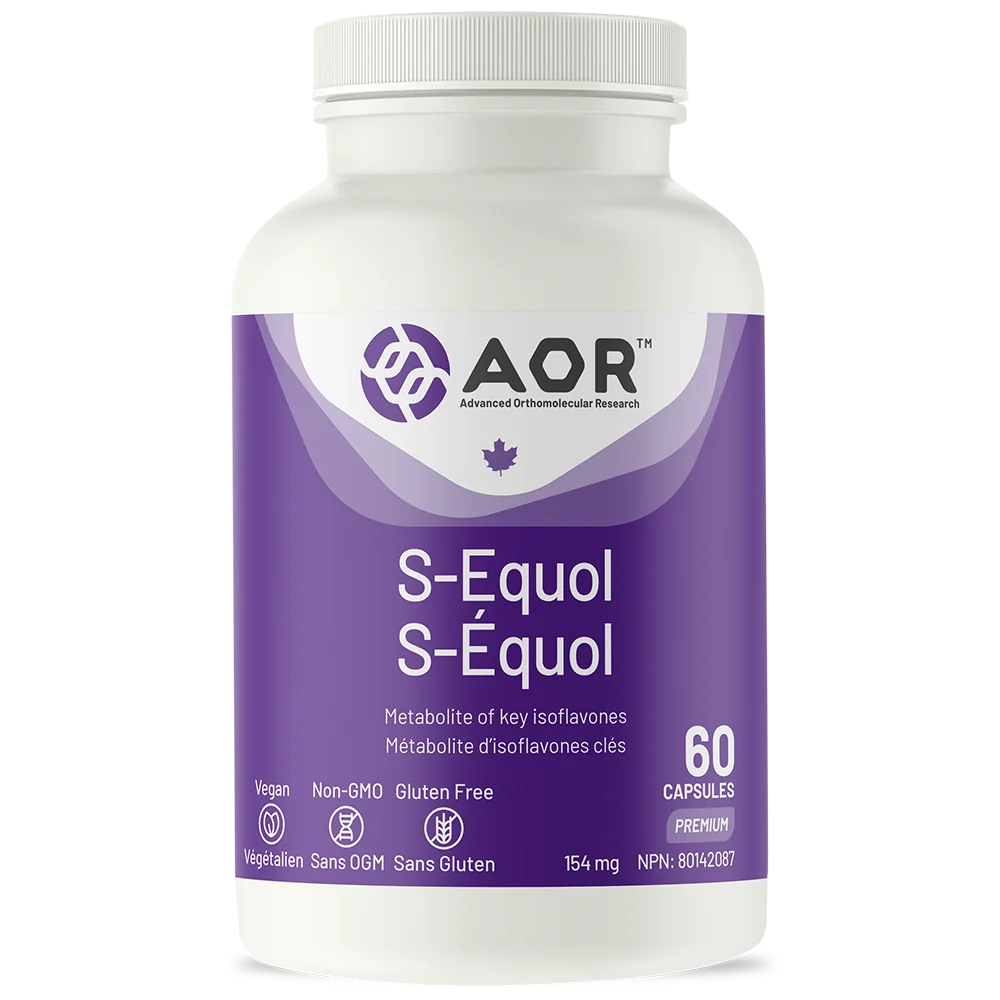
- Helps relieve hot flashes associated with menopause
- Evidence supported dose
- Produced through the fermentation of soy
S-Equol is a natural compound related to soy. Unlike many soy isoflavones, S-Equol is not typically found in soy foods. Instead, it is produced when certain gut bacteria convert a soy isoflavone called daidzein into S-Equol. Because not everyone has the specific gut bacteria needed for this conversion, the ability to produce S-Equol varies from person to person. This means, simply eating soy may not lead to the production of S-Equol in the gut.
S-Equol has become a widely studied ingredient for direct and indirect menopause support. During menopause, changing hormone levels can contribute to symptoms. S-Equol has become a popular ingredient in menopause support products because it may help relieve hot flashes.
The caution statements associated with S-Equol are standard Health Canada requirements for ingredients that interact with hormone pathways. They are intended to identify individuals who may benefit from guidance from a healthcare practitioner before use and do not apply to all consumers. Please read and be aware of the cautions on the bottle.
AOR advantage
AOR provides S-Equol in its active form for non-hormonal relief of menopausal and postmenopausal hot flashes.
80142087
Menopausal and post-menopausal women (18 and older): Take 1-2 capsules daily or instructed by a healthcare practitioner. Take a few hours before or after taking other medications or health products. Do not exceed daily dose unless instructed by a healthcare practitioner.
Allergens: Do not use if you are allergic to soy.
Do not use if:
- You are taking antidepressants.
- You have or had breast cancer or tumors or a predisposition to breast cancer, as indicated by an abnormal mammogram or biopsy, or a family member with breast cancer.
Ask a healthcare practitioner before use if:
- You have endometrial cancer or ovarian cancer.
- You are undergoing hormone replacement therapy.
- You are pregnant or breastfeeding.
- You have a liver disorder, kidney disorder, cardiovascular disease or history of hormonal or gynaecological disease.
- You are not up to date on mammograms and gynecological evaluations.
- You are taking blood thinners.
Ask a healthcare practitioner:
- If symptoms persist or worsen.
- For use beyond 1 year.
Stop use and ask a health care practitioner if new symptoms develop such as breast pain or pressure, a recurrence of menstruation, uterine spotting, vaginal discharge, abdominal fullness, or liver-related symptoms (e.g. abdominal pain, jaundice, dark urine).